

Northwest Pipe Company’s Innovative Radial Bending Joint Makes its Florida Debut in Water Pipeline Project
 >
>
Patent-pending Permalok® technology enables curved trenchless installations, reducing costs and construction impacts
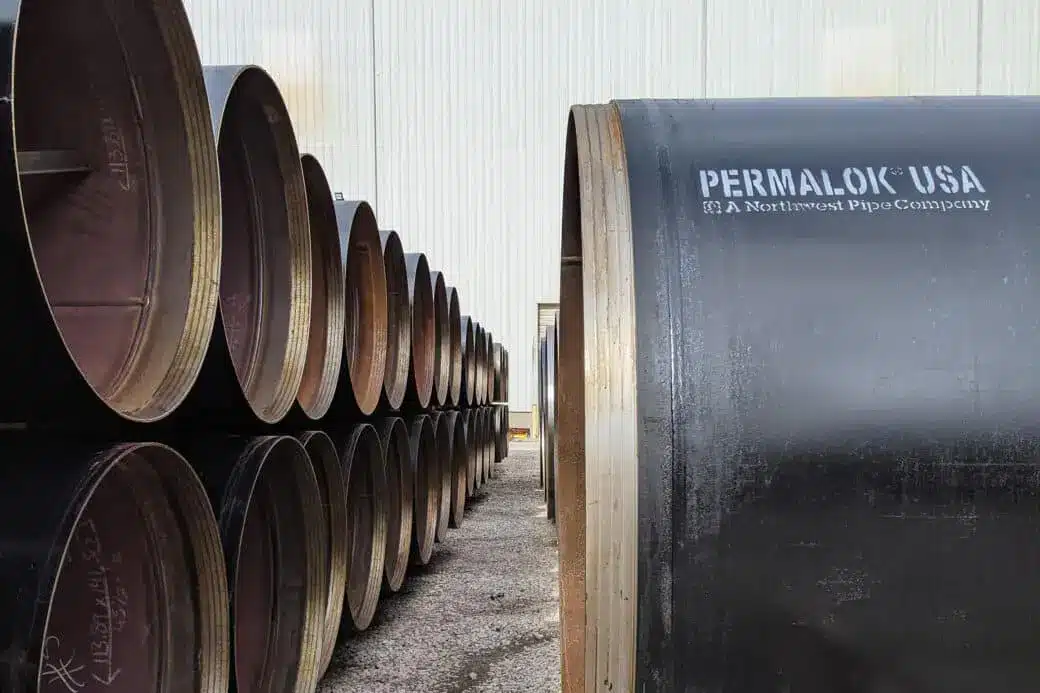
We’re proud to announce the first commercial use of Northwest Pipe Company’s Permalok® Radial Bending Joint (RBJ) in a major water pipeline project.
The patent-pending RBJ technology allows steel casing pipe to be installed along a curved path in microtunneling applications. This engineered advancement creates more opportunities for maneuverability in congested tunnel alignments, allowing the pipe path to bend and adapt to specific site conditions, which could include existing utility lines, monuments, and building foundations. Additional benefits include a smaller jobsite footprint, fewer shafts, and more precise execution of tunneling over longer distances.
Northwest Pipe Company is supplying 5,764 linear feet of Permalok® steel casing pipe for the South Hillsborough Pipeline project, which includes 18 underground crossings. The project, managed by Tampa Bay Water, will deliver up to an additional 65 million gallons of water per day from a regional treatment facility east of Tampa to a water treatment plant in Lithia and a future drinking water facility near Balm. Garney serves as the project’s construction manager, and Huxted Trenchless is the microtunneling contractor.
The curved RBJ segment allows Tampa Bay Water to install microtunneling shafts within their prescribed bore path alignments, which are along easements and rights of ways. This eliminates additional shafts that would be required if the pipe were to be installed in straight segments.
“The RBJ is revolutionizing microtunneling,” said Scott Montross, President and CEO of NWPX Infrastructure. “For the first time, steel casing pipe can be installed along a curved path in trenchless applications with ease. In this case, the RBJ’s curved segments allow microtunneling shafts to be constructed within utility easements, avoiding the need for extra shafts and tunnels, and reducing overall project costs.”